16 Jul Agronomy Update – July 16
Hi everyone,
A slightly shorter Agronomy Update this week…I’m attending a conference in Nova Scotia this week, getting some great ideas on improving extension/knowledge transfer!
As I’ve been away all week, I’m not fully up to speed on the latest updates from the field. You will find the Aphid Alert and Air Spore updates below.
I’m hearing that CPB larva are becoming easy to find in a number of fields. I’ve also had some photos of corn borer damage and corn borer larvae in stems sent to me in the last few days. Be diligent in scouting for both of these insect pests.
I am looking for a couple of fields that have Colorado potato beetles for an AIM trial looking at drone spraying and perimeter spraying. If you have some level of CPB and you would be interested in participating in this trial, please send me an email or give me a call/text. I’m hoping to set up the spray trial in the next two weeks.
Early Blight/Brown Spot Control:
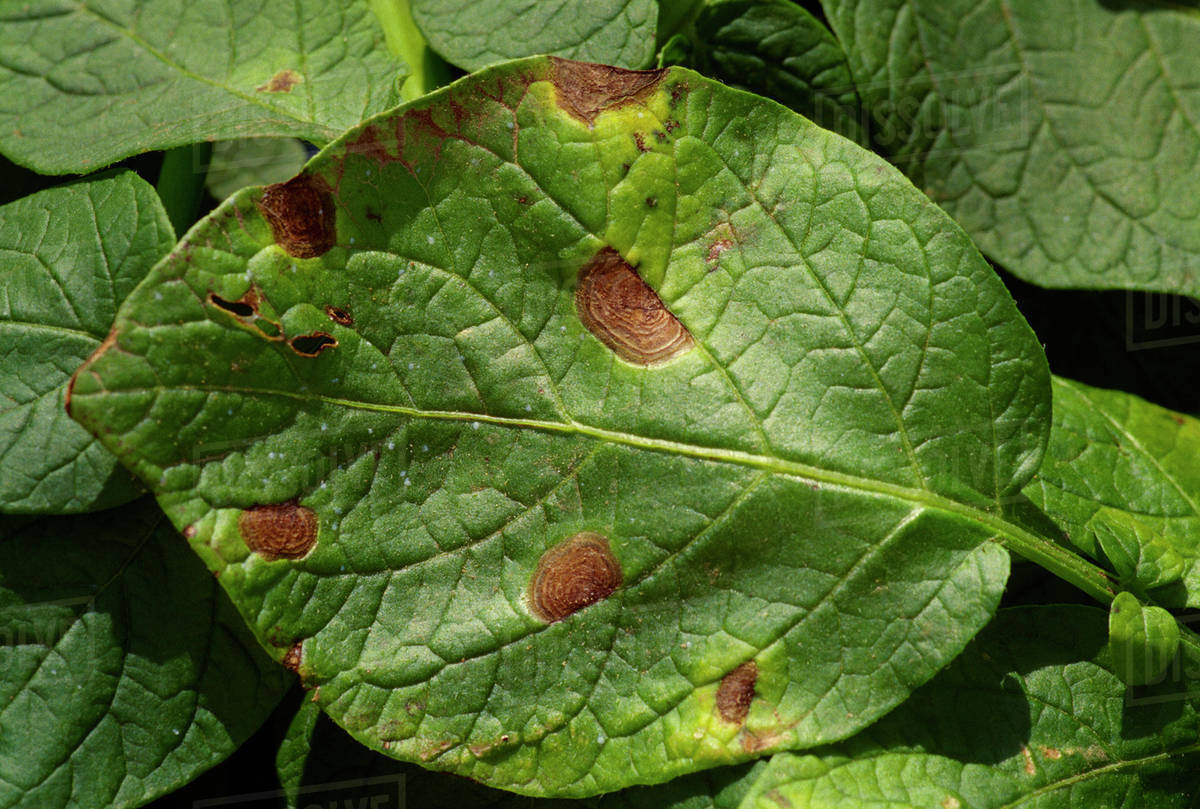
A number of fields are approaching row closure. For those wanting to ensure timely prevention of early blight/brown spot infection, it is suggested that you get at least one or two application of a targeted fungicide on before row closure. Some varieties are more susceptible to Alternaria than others, so consult with your scouting/agronomy team to determine timing and number of applications.
Based on recent local research, it is important to use fungicides that are labelled for both early blight and brown spot. Here is a list of fungicides that are approved in Canada and are labelled for control of both diseases: (Disclaimer: these products may not be available from your local supplier, and this may not be a fully comprehensive list of all available products).
- Miravis Duo (Groups 3 + 7)
- Propulse (Groups 3 + 7)
- Luna Tranquility (Groups 7 + 9)
- Cevya (Group 3)
- Quadris Top (Group 3 + 11)
- Veltyma (Groups 3 + 11)
- Aprovia Top (Groups 3 + 7)
To maximize efficacy and minimize fungicide resistance, it is recommended to rotate chemistries as much as possible and not use the same products twice in a row. This is difficult for Alternaria, as there are limited groups of chemistries available, and lots of products with multiple active ingredients. However, rotating chemistries as much as possible is advised. For example, if you use Luna Tranquility for your first spray, your follow up spray should include something with Group 3.
Air Spore Results:
| 13-Jul-26 | |||||
| Region | Late Blight | Early blight | Brown Spot | Grey Mold | Fusarium Stem Rot |
| (Phytophora infestans) | (A. solani) | (A. alternata) | (Bortrytis cinerea) | (Fusarium spp.) | |
| West Prince | 0 | 12 | 0 | 6 | 0 |
| East Prince | 0 | 223 | 13 | 4 | 22 |
| Queens | 0 | 2991 | 0 | 13 | 44 |
| Kings | 0 | 101 | 0 | 33 | 9 |
| 15-Jul-26 | |||||
| Region | Late Blight | Early blight | Brown Spot | Grey Mold | Fusarium Stem Rot |
| (Phytophora infestans) | (A. solani) | (A. alternata) | (Bortrytis cinerea) | (Fusarium spp.) | |
| West Prince | 0 | 0 | 0 | 2 | 7 |
| East Prince | 0 | 0 | 0 | 6 | 2 |
| Queens | 0 | 9 | 0 | 31 | 0 |
| Kings | 0 | 56 | 0 | 165 | 0 |
- Late blight spores have not being found in PEI or NB thus far. Late blight spores have been found in Maine in multiple locations.
- Early blight spores hit some high numbers in the central part of the province on Monday, but have declined quite a bit by Wednesday. Brown spot and grey mold counts are very low across the province.
Aphid Alert:
| Date | Region | # of Samples | Green Peach | Potato | Buckthorn | Foxglove | Bird
Cherry-Oat |
Other | Tarnished
Plant Bug |
Total Aphids | Average Aphids per Sample |
| 13-Jul-26 | WEST PRINCE | 12 | 0 | 6 | 37 | 0 | 4 | 135 | 0 | 182 | 15.17 |
| EAST PRINCE | 7 | 0 | 1 | 5 | 0 | 3 | 18 | 2 | 27 | 3.86 | |
| QUEENS | 9 | 0 | 0 | 15 | 0 | 4 | 23 | 0 | 42 | 4.67 | |
| KINGS | NA | NA | NA | NA | NA | NA | NA | NA | NA | NA | |
| Total | 28 | 0 | 7 | 57 | 0 | 11 | 176 | 2 | 251 | 8.96 | |
| Week Ending | Region | # of Samples | Green Peach | Potato | Buckthorn | Foxglove | Bird
Cherry-Oat |
Other | Tarnished
Plant Bug |
Total Aphids | Average Aphids
per Sample |
| 11-Jul-26 | WEST PRINCE | 26 | 0 | 7 | 94 | 0 | 21 | 196 | 0 | 318 | 12.23 |
| EAST PRINCE | 16 | 0 | 3 | 19 | 0 | 1 | 38 | 0 | 61 | 3.81 | |
| QUEENS | 18 | 0 | 3 | 26 | 0 | 1 | 51 | 0 | 81 | 4.50 | |
| KINGS | 5 | 1 | 0 | 6 | 0 | 1 | 35 | 0 | 43 | 8.60 | |
| Total | 65 | 1 | 13 | 145 | 0 | 24 | 320 | 0 | 503 | 7.74 |
- Aphid numbers continue to be relatively high week to week, but have declined somewhat in the last week or so.
- Aphid numbers are much higher in West Prince (where we have the most traps) than the rest of the province.
- The majority of aphids are non-colonizing aphids, but there are a significant number of Buckthorn aphids present, especially in West Prince.
- As we continue to be a in phase of rapid plant growth, seed grower are recommended to keep a tight schedule of oil and aphicide sprays.
Crop Update Meeting #2:
Our second Crop Update Meeting is scheduled for next Tuesday, July 21st. See the invite below!
Join Zoom Meeting
https://us02web.zoom.us/j/81493977354?pwd=lN2vgqVQDBWmFYaqhNPuNXb3lBLgpF.1
Meeting chat link
https://us02web.zoom.us/launch/jc/81493977354
Meeting ID: 814 9397 7354
Passcode: peipb
Look forward to connecting with you next week!
Ryan