Sign Up For News Updates
Potato Wart: Resources for Producers
This page provides information on the nature and history of potato wart, the current status of potato wart in Prince Edward Island, and resources for producers and industry partners.
Biology of Potato Wart
Potato Wart: The Pathogen
Potato wart is a plant disease caused by a soil-borne fungus. Although it poses no risk to human or animal health, it reduces yield and makes potatoes disfigured. Potato wart is a quarantine pest and as such, as well as affecting the quality of the potato crop the presence of potato wart in an area results in additional restrictions and requirements for trade.
Potato wart survives in the soil as hardy, microscopic structures called resting spores. Resting spores develop inside the warts that grew on a previous potato crop grown in an infested field. During harvest, wart pieces can break off of infected tubers in the field or infected tubers can remain in the ground unharvested. As the wart pieces or warted tubers left in the ground decay during the winter months, individual resting spores are released into the soil, ready to infect the next potato crop.
In the spring, when temperatures are cool and there is sufficient moisture in the soil, the hardy resting spores germinate to release their contents. Each individual resting spore contains 200-300 tiny mobile zoospores (cells). Zoospores get carried very short distances within the soil water to reach a nearby potato plant to start a new infection. Once inside the potato plant, the fungus multiplies itself, forming new fresh spores called summer spores. Under ideal weather conditions throughout the growing season, the summer spores germinate and re-infect the same potato plant. This cycle of infection and re-infection may be repeated for as long as weather conditions are suitable. The more often this cycle repeats itself during the summer, the larger the warts become, resulting in their characteristic cauliflower-like appearance.
During late summer, the fungus stops producing summer spores and instead begins to produce more long-lived resting spores. These remain embedded inside the newly formed warts, thus completing the life cycle.
The disease can be spread by infected seed potato tubers (used to plant a new crop of potatoes) which may have small undetected warts, or in the contaminated soil which remains attached to unwashed tubers or farm equipment. The hardy resting spores can survive digestion by animals fed infected tubers and, therefore, can be spread by manure.
Although some potato wart spores can survive in the soil for 40 years, the mortality rate of spores in cultivated land where a non host crop is grown is high.
Source: CFIA website
Movement and Control Measures
Movement and Control Measures
Natural spread of potato wart is very restricted and zoospores can travel less than 50 mm in the soil. The primary method of spread is human mediated.
The disease can be spread from an infected field by seed potato tubers which may have small undetected warts, or in the contaminated soil which remains attached to unwashed tubers or soil on farm equipment. The hardy resting spores can survive digestion by animals fed infected tubers and, therefore, can be spread by manure if animals are fed potatoes from an infected field.
In global areas where potato wart has been found, it has been kept in check through strict quarantine measures that address these human mediated means of spread from an infected field.
National Potato Wart Response Plan – New in 2025
National Potato Wart Response Plan provides detailed information to the CFIA, potato industry stakeholders, provincial and territorial government stakeholders and other national plant protection organizations on phytosanitary measures to improve processes to help contain, control, and prevent the spread of potato wart from any regulated areas in Canada, except for NL. It also supports the long-term sustainability of the potato sector in Canada. This response plan supersedes the 2009 management plan.
For PEI, the prohibitions and requirements specified in the Potato Wart Order remain in place and are in addition to the risk mitigation measures outlined in this response plan.
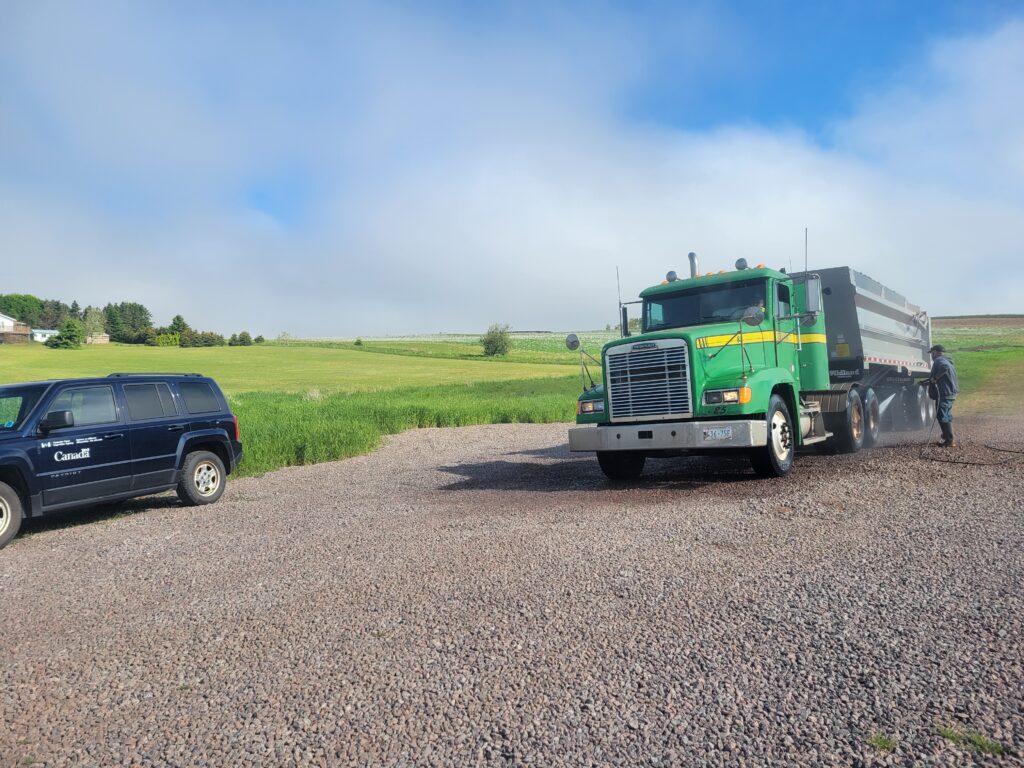
Gravel pad installed at field edge to assist with cleaning and disinfection requirements.
History
Global Distribution and Potato Wart in North America
Potato wart has been reported in Asia, Africa, Europe, Oceania, North America, and South America.
It is believed that potato wart was introduced into North America on potatoes from Europe.
It was first detected in Newfoundland in 1909. Due to low incidence but wide geographical spread in coastal areas around Newfoundland of potato wart and other soil borne quarantine pests, the province has remains under quarantine restrictions via Canadian Food Inspection Agency Plant Protection Regulations.
Potato wart was first detected in Pennsylvania in 1918 and later in Maryland and West Virginia. Spores were last detected in Maryland in 1987 and it was declared eradicated by USDA in 1994.
History of Potato Wart in PEI
2000 to 2009
- Potato wart was first detected in PEI in 2000 through visual symptoms found in potatoes grown for local processing use.
- A province wide visual surveillance and soil testing program was carried out by CFIA on all potato fields in the province. During this program, one further cluster of infected fields was detected on one processing farm.
- An interim management plan with strict quarantine measures for infected and associated fields was put in place in collaboration with USDA.
- The Domestic Long Term Management Plan is revised.
- Specific Surveillance continues by CFIA on fields restricted under the Long Term Management and general surveillance takes place across the industry through the visual inspection via the CFIA Seed Potato Certification Program as well as through programs such as the PEI Agricultural Crop Insurance Corporation fall harvest quality inspection program covering 90% of the potato acres in PEI.
2009-2019
- Two new detections are made in 2012 and 2014 on farms unrelated to previous detections.
- These incidences are investigated and quarantine measures put in place as per the Long Term Management Plan.
- A US Federal Order is put in place that requires that PEI seed being shipped to the US must come from fields that have been soil tested and found free of potato wart spores.
- Specific and general surveillance for potato wart symptoms in the PEI potato crop continue.
2020 – 2022
- Potato wart spores are detected in soil samples from two adjacent fields being tested for the US seed export testing program. This is the first detection made via spores only with no visual symptoms in tubers.
- Quarantine measures are immediately put in place as per the Potato Wart Long Term Management Plan and the investigation commences. The US halts all seed imports while the investigation is carried out.
- No further positive samples are detected in all the investigation testing of associated fields. The original two fields with the positive samples are resampled at a tighter grid with no further detections. The two acres where the positive samples originated are resampled at an even tighter grid and no positive samples are detected.
- US reopens the market to PEI seed potatoes from fields soil tested for potato wart spores.
- CFIA begins a re-evaluation of the Potato Wart Long Term Management plan in light of the 2020 spore detections.
- Two new detections of visual potato wart symptoms are detected in processing fields that are related to previous detections of potato wart.
- CFIA imposes a Ministerial Order limiting potato exports from PEI to other provinces to fresh potatoes meeting risk mitigation measures while the investigation takes place.
- The US is closed to all PEI Potato imports from November 2021 to April 2022 when it reopens to fresh washed and sprout nipped potatoes – proven risk mitigation measures recognized to prevent spread of potato wart.
Current Status
Current Status in PEI
Current amount of index land (fields where potato wart symptoms or spores have been detected in at least part of the field) in PEI is 1500 acres found in 37 fields. This is 0.8% of all land in the potato rotation in PEI. The most recent investigation involved the testing of 48,789 soil samples from fields related to the 2021 visual symptom detections. A total of four samples were found positive for potato wart spores or 0.008% of all samples tested. Potato wart is present in PEI, in very limited incidence and is under official control.
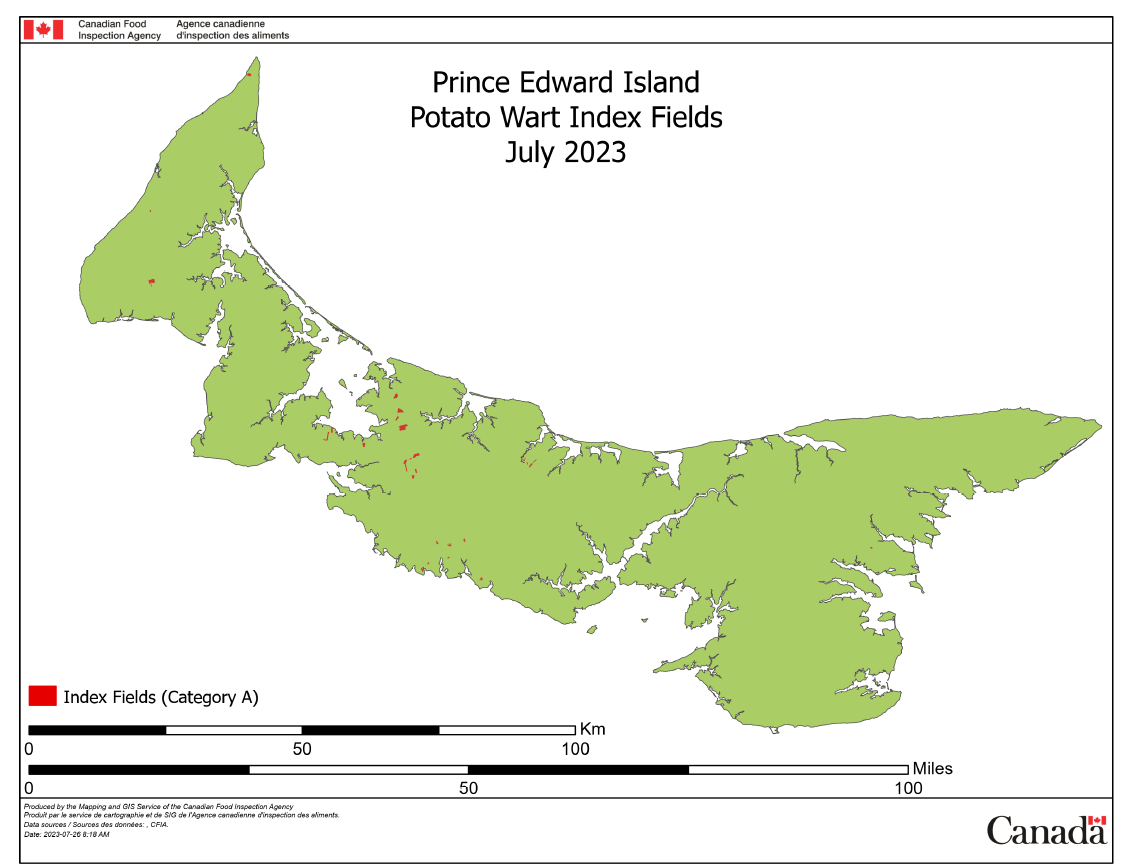
Measures to Prevent Spread from Infested and Related Fields and Additional Layers of Risk Mitigation Measure to Facilitate Trade
The Primary methods of spread are human mediated – the movement of seed potatoes and soil from an infected field.
Prior to 2025, potato wart was managed under the 2009 Domestic Long Term Management Plan. This plan first outlined the process to identify fields associated with potato wart and then employed quarantine measures to prevent spread from known infested and associated fields via restrictions on seed potato production and controls on soil and product movement from infested fields as well as fields closely associated with infested fields. This plan will be replaced by the National Potato Wart Response Plan, released in early 2025.
Additional regulations impacting the movement of potatoes and/or soil:
- Canadian Ministerial Order – Includes movement restrictions and risk mitigation measures, such as washing and sprout nipping of fresh potatoes for consumption. Limits seed potato movement.
- USDA Federal Order DA 2015
-
- No seed potatoes from PEI are permitted entry (with the exception of nuclear stock produced in a protected environment).
- All potatoes for consumption must be washed and a sprout inhibitor must be applied.
- All shipments must be graded to US #1 standard & require a phytosanitary inspection by CFIA prior to export.
- Trade agreements that outline shipping requirements for each offshore market country.
Updating Regulations in Canada’s National Response Plan for Potato Wart
- Regulations have been in place since 2000 with the last revision made in 2009.
- Information utilized in the development of the new National Response Plan (enacted in 2025):
- International Advisory Panel Report – In July 2022, the Canadian Food Inspection Agency (CFIA) requested support from international experts to obtain independent expert scientific advice on the management and control of Potato Wart Disease on Prince Edward Island (PEI). The scope of this work was focused on providing recommendations on management of the pest going forward and returning areas of PEI where the pest is known not to occur to Pest Free Area for Potato Wart Disease status according to international standards.
- Canadian Industry Long Term Management Plan Review Committee – this committee of industry members from across the country, supported by CFIA staff, reviewed the current Long Term Management Plan, discussed the recommendations of the International Panel and provided a report including recommendations on suggested changes for a revised plan. The report was provided to CFIA in April 2023.
- Input from public consultation throughout 2024.
Ongoing Surveillance
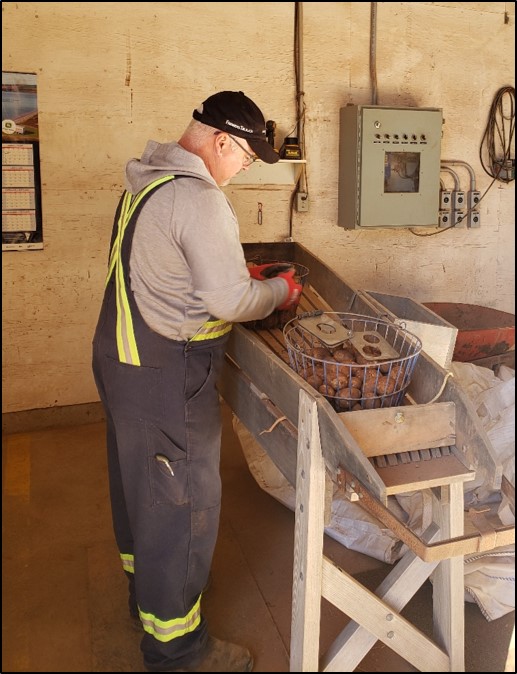
- General surveillance that takes place across the PEI industry through the CFIA Seed Potato Certification Program as well as through programs such as the PEI Agricultural Crop Insurance Corporation fall harvest quality inspection program which covers 90% of the potato acres in PEI.
- The National Potato Wart Soil Survey conducted by CFIA in 2021, 2022, 2023 and 2024, which targeted fields planted with PEI seed potatoes as one criteria for field selection, has shown no positive detections of spores.
Resistant Varieties
Resistant varieties are a tool commonly used in Europe in fields in areas where potato wart has been found. The increased use of this tool was included in many recommendations made by the International Panel.
“Cultivation of such field-resistant cultivars will adequately protect against build-up of inoculum, because production of warts (sporangia) in these cultivars during the season, if any, will be too low to support secondary infection, either of neighbouring plants or of plants in a successive crop. This will eventually result in the extinction of the fungus. Our findings agree with those of Doroshkin (1959) and Rintelen et.al (1983), who similarly reported that resistant potato cultivars grown on wart-infested fields will clean the soil from infection.”
Baayen, R.P., H. Bonthuis, J.C.M. Withagen, J.G.N. Wander, J.L. Lamers, J.P. Meffert, G. Cochius et al. 2005. Resistance of potato cultivars to Synchytrium endobioticum in field and laboratory tests, risk of secondary infection, and implications for phytosanitary regulations. EPPO Bulletin 35(1):9-23.
Detection and longevity of potato wart pathogen in once-infested foci
“The cultivation of resistant potato varieties leads to increased germination of sporangia and thus further cleaning of the soil.”
- Rintelen, M. Schöner und W. Hunnius
Journal of Plant Diseases and Protection 90 (3), 251-257, 1983. ISSN 0340-815
Resistant varieties have been used a s a tool to control golden nematode in New York State as commercial cultivars have been developed by the Cornell breeding program and made available to the local industry that can lead to significant population reductions each year.
There are currently a limited number of resistant varieties available to Canadian growers. Work is ongoing by AAFC and private breeding programs and European variety agents to identify resistance and increase pool of resistant varieties available to Canadian growers.
Working towards Eradiation
Potato wart was declared eradicated in the US in 1994 and more recently in Northern Ireland in 2012. With the limited incidence in PEI, low population levels, and controls in place to prevent spread, the Prince Edward Island industry is confident that eradication of potato wart over time is an achievable goal.